Knee Replacement vs Hip Replacement Recovery: What Are the Key Differences?
Published
Local Physiotherapist - Lizzie Thornton, Staffordshire Moorlands & Cheshire East
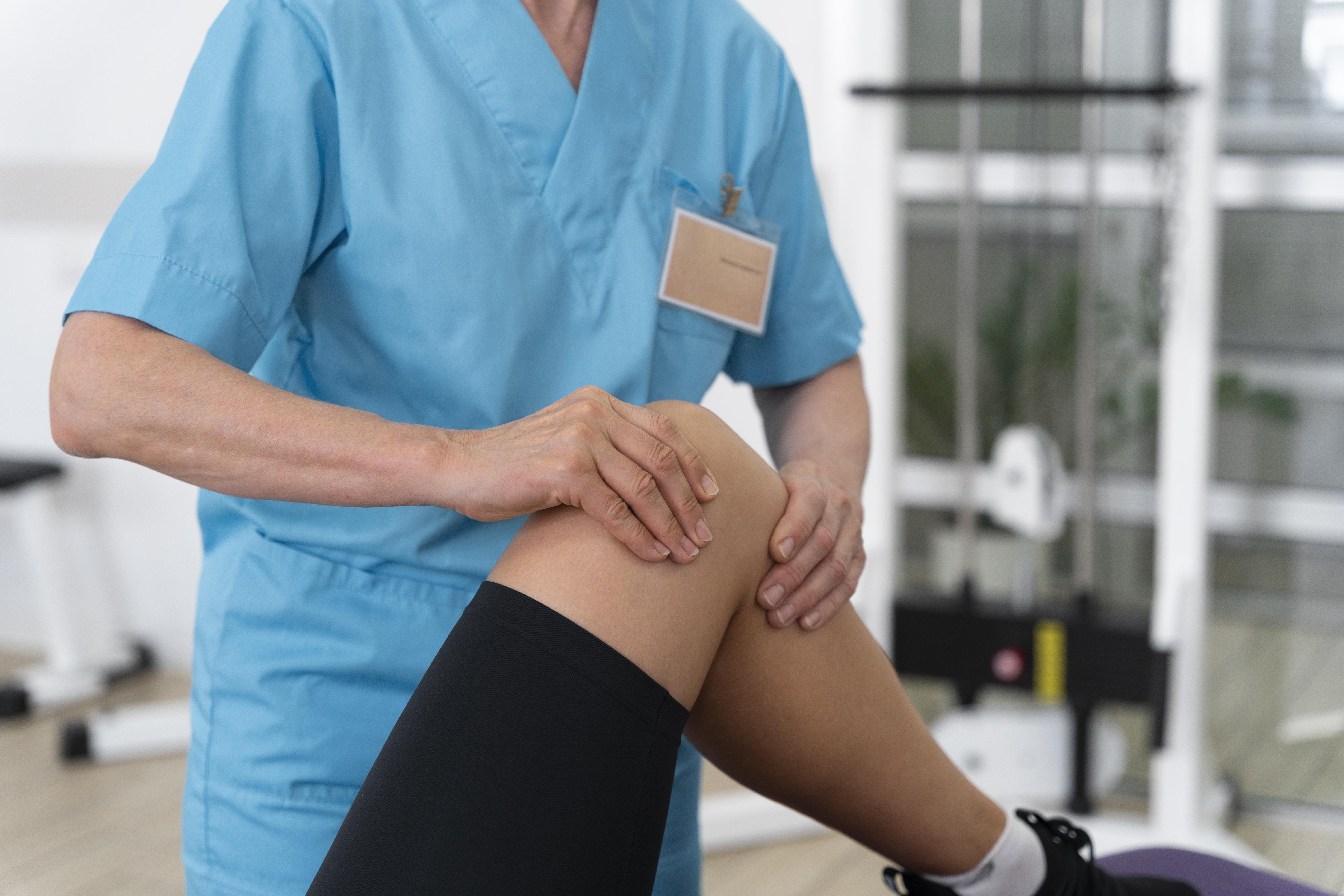
Both knee and hip replacements are highly successful procedures, but their recovery journeys differ significantly. Understanding these differences helps you prepare properly and set realistic expectations for your rehabilitation.
The fundamental difference
While both procedures replace damaged joints with artificial ones, the biomechanics and functional demands differ considerably. Hip joints are ball-and-socket joints designed for stability and weight-bearing with a wide range of motion, while knee joints are hinge joints that bear significant load while requiring precise alignment and control.
These structural differences directly impact how each joint recovers and what challenges you will face during rehabilitation.
Recovery timeline comparison
Hip replacement recovery
- Walking: Most people walk with aids within 1-2 days post-surgery
- Independence: Basic self-care returns within 2-3 weeks
- Driving: Typically 6-8 weeks
- Full recovery: 3-6 months for most activities
Knee replacement recovery
- Walking: Walking with aids starts within 1-2 days, but often more painful initially
- Independence: Basic self-care returns within 3-4 weeks
- Driving: Typically 8-12 weeks (especially for right knee)
- Full recovery: 6-12 months, with some stiffness persisting longer
Pain and swelling differences
Hip replacement
Pain after hip replacement is generally well-controlled with medication. Most people describe it as deep aching rather than sharp pain, manageable within 2-3 weeks, with minimal localized swelling and night pain usually resolving within 4-6 weeks.
Knee replacement
Knee replacement pain tends to be more challenging. It is often more intense in the first 2-3 weeks, with sharp pain during movement (especially bending), significant swelling that can persist for months, and night pain that may continue for 8-12 weeks. Anterior knee pain at the front of the knee is common during recovery.
Why the difference? The knee has more nerve endings and soft tissue involvement. The quadriceps muscle at the front of the thigh is often weakened significantly, and regaining knee flexion requires stretching tight scar tissue.
Range of motion challenges
Hip replacement
Hip range of motion typically returns more easily. Most people regain functional range within 6-8 weeks. Hip precautions limit movement initially, but these are temporary, and stiffness is less common as a long-term issue.
Knee replacement
Achieving full knee range of motion is often the biggest challenge. For flexion (bending), aim for 110-120 degrees, but this takes dedicated work. For extension (straightening), achieving full extension is crucial for normal walking. Scar tissue can limit movement if not addressed early, and some people never regain their pre-surgery range, especially deep flexion.
This is why Hip & Knee Replacement Rehabilitation focuses heavily on range of motion exercises from day one.
Functional recovery differences
Stairs
- Hip replacement: Most people manage stairs within 2-3 weeks with a rail
- Knee replacement: Stairs remain challenging for 6-8 weeks, often requiring step-by-step technique initially
Getting up from sitting
- Hip replacement: Manageable within days, though high chairs are recommended initially
- Knee replacement: Can be difficult for 4-6 weeks, especially from low chairs
Walking distance
- Hip replacement: Many people walk 10-15 minutes by week 3-4
- Knee replacement: Walking is more uncomfortable initially; building distance takes longer
Exercise programme differences
Hip replacement exercises focus on
- Hip abduction (lifting leg to the side)
- Hip extension (lifting leg backwards)
- Gluteal strengthening
- Walking practice
- Respecting hip precautions
Knee replacement exercises focus on
- Achieving full extension (straight leg)
- Progressive flexion (bending)
- Quadriceps strengthening
- Reducing swelling
- Patellar mobility (kneecap movement)
Which is harder to recover from?
Most physiotherapists and patients agree that knee replacement recovery is generally more challenging than hip replacement. Here is why:
- More pain: Knee replacements typically cause more post-operative discomfort
- Greater swelling: Knee swelling can persist for many months
- Range of motion work: Achieving adequate knee flexion requires persistent, often uncomfortable exercises
- Functional demands: Knees are used constantly for sitting, standing, stairs, and walking
- Longer timeline: Full recovery takes 6-12 months versus 3-6 months for hips
However, both procedures have excellent long-term outcomes. The extra effort required for knee replacement is worth it for the pain relief and improved function you will gain.
Common complications comparison
Hip replacement
- Dislocation (rare, but requires strict precautions)
- Leg length discrepancy
- Nerve injury (uncommon)
Knee replacement
- Stiffness (most common complication)
- Persistent anterior knee pain
- Difficulty achieving full extension
- Patellar tracking issues
The role of physiotherapy
Professional physiotherapy support is beneficial for both procedures, but it is particularly valuable for knee replacement recovery due to the greater challenges involved.
Hip & Knee Replacement Rehabilitation provides:
- Personalized exercise progression
- Hands-on treatment for range of motion
- Swelling management techniques
- Gait retraining
- Problem-solving when progress stalls
- Confidence building for functional activities
Tips for successful recovery
For hip replacement
- Follow hip precautions strictly for the first 6-12 weeks
- Focus on walking and building distance
- Strengthen your gluteal muscles
- Use high chairs and raised toilet seats
For knee replacement
- Ice regularly to control swelling (20 minutes, 3-4 times daily)
- Work on achieving full extension from day one
- Push through discomfort (not pain) with flexion exercises
- Elevate your leg when resting
- Be patient — improvement continues for a full year
The bottom line
While both hip and knee replacements are life-changing procedures, knee replacement typically involves a longer, more challenging recovery. Hip replacement patients often feel significantly better within 6-8 weeks, while knee replacement patients may take 3-6 months to feel truly comfortable.
Understanding these differences helps you prepare mentally and physically for your specific surgery. Regardless of which procedure you are having, consistent exercise, patience, and professional support are key to achieving the best possible outcome.
Need expert support for your recovery?
Whether you are recovering from hip or knee replacement, our Hip & Knee Replacement Rehabilitation service provides personalized rehabilitation at home. We understand the unique challenges of each procedure and tailor your programme accordingly.
Get in touch Learn about Hip & Knee Replacement Rehabilitation

About Lizzie Thornton
Lizzie Thornton is a specialist community physiotherapist with over 15 years of experience working with older adults. She is HCPC registered and a member of the Chartered Society of Physiotherapy. Lizzie has supported hundreds of patients through hip and knee replacement recovery, providing home physiotherapy visits across Staffordshire Moorlands and Cheshire East.