Posture Correction Exercises for Desk Workers
Published
Local Physiotherapist - Lizzie Thornton, Staffordshire Moorlands & Cheshire East
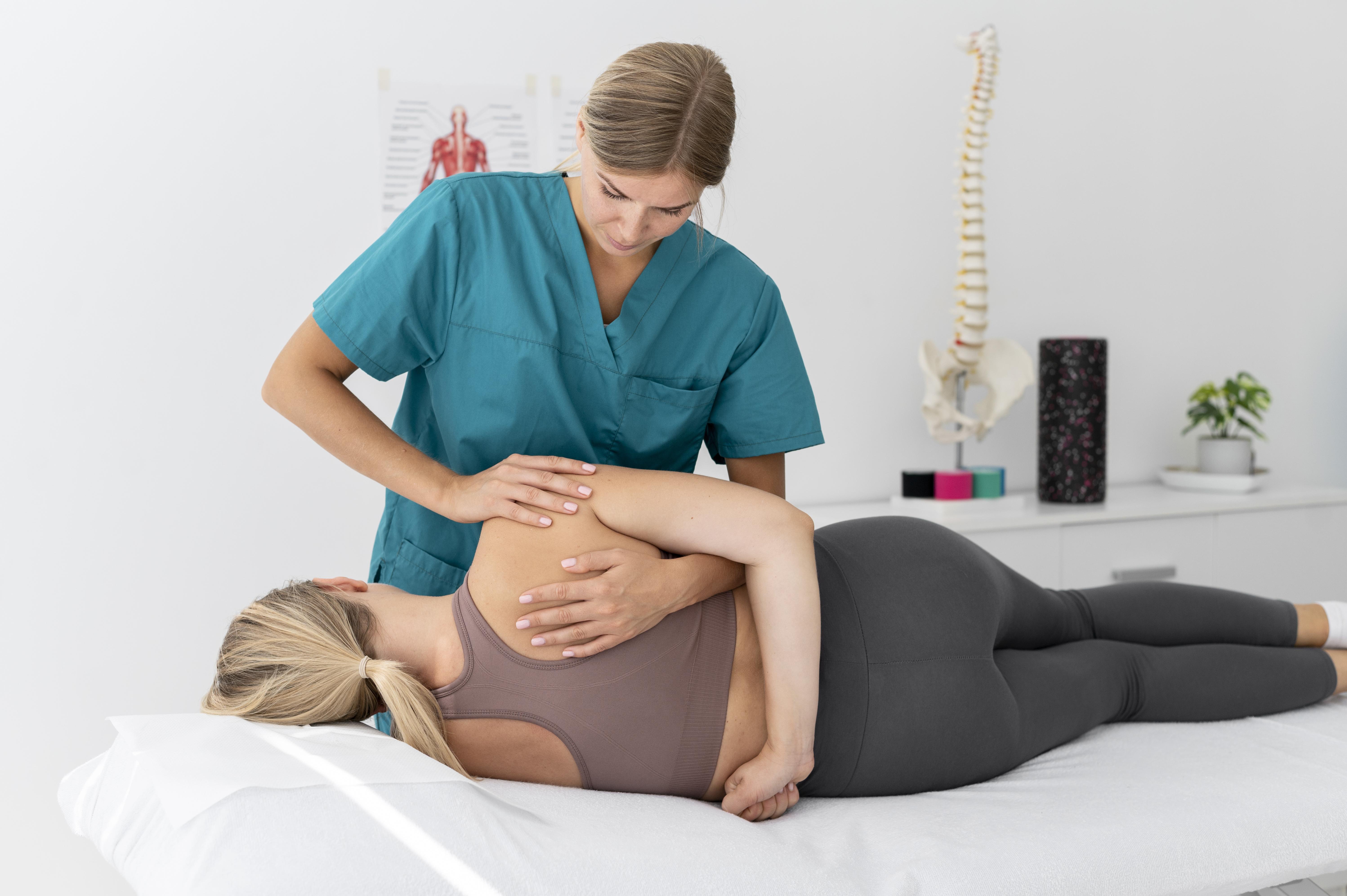
Poor posture from prolonged desk work causes neck pain, back pain, headaches, and fatigue. These targeted exercises and ergonomic strategies can correct posture, reduce pain, and prevent long-term problems.
Understanding desk worker posture problems
Common postural issues
- Forward head posture: Head jutting forward
- Rounded shoulders: Shoulders rolled forward
- Upper crossed syndrome: Tight chest and weak upper back
- Slouched lower back: Loss of natural lumbar curve
- Elevated shoulders: Shoulders hunched up
Consequences of poor posture
- Neck and shoulder pain
- Upper and lower back pain
- Headaches and migraines
- Reduced lung capacity
- Fatigue and reduced concentration
- Nerve compression (pins and needles)
- Long-term spinal changes
Assessing your posture
Simple self-assessment
Stand sideways to a mirror:
- Ear should align over shoulder
- Shoulder over hip
- Hip over knee
- Knee over ankle
If your ear is forward of your shoulder, you have forward head posture.
Sitting posture check
- Are you slouching?
- Is your head forward?
- Are your shoulders rounded?
- Is your lower back unsupported?
- Are your feet flat on floor?
Stretching exercises
Release tight muscles that pull you into poor posture.
1. Chest doorway stretch
Purpose: Stretch tight chest muscles
How to do it:
- Stand in doorway
- Place forearms on door frame, elbows at 90 degrees
- Step forward until stretch felt across chest
- Hold 30 seconds
- Repeat 3 times
- Do 3-4 times daily
2. Upper trapezius stretch
Purpose: Release tight neck/shoulder muscles
How to do it:
- Sit with good posture
- Tilt head to right, ear towards shoulder
- Place right hand gently on left side of head
- Add gentle pressure
- Hold 30 seconds
- Repeat 3 times each side
3. Levator scapulae stretch
Purpose: Stretch muscle connecting neck to shoulder blade
How to do it:
- Sit with good posture
- Turn head 45 degrees to right
- Tilt head down, nose towards armpit
- Place right hand on back of head
- Add gentle pressure
- Hold 30 seconds
- Repeat 3 times each side
4. Lat stretch
Purpose: Stretch side muscles
How to do it:
- Sit or stand
- Raise right arm overhead
- Lean to left
- Hold 30 seconds
- Repeat 3 times each side
5. Hip flexor stretch
Purpose: Stretch tight hip flexors from prolonged sitting
How to do it:
- Kneel on one knee
- Other foot forward, knee bent
- Push hips forward
- Feel stretch in front of back hip
- Hold 30 seconds
- Repeat 3 times each side
Strengthening exercises
Strengthen weak muscles to support good posture.
6. Chin tucks
Purpose: Strengthen deep neck flexors
How to do it:
- Sit with good posture
- Look straight ahead
- Draw chin back (double chin)
- Do not tilt head down
- Hold 5 seconds
- Repeat 10 times
- Do hourly during work day
7. Shoulder blade squeezes
Purpose: Strengthen upper back muscles
How to do it:
- Sit or stand with good posture
- Squeeze shoulder blades together
- Imagine holding a pencil between them
- Hold 5 seconds
- Relax
- Repeat 10 times
- Do 3-4 times daily
8. Wall angels
Purpose: Strengthen upper back, improve shoulder mobility
How to do it:
- Stand with back against wall
- Feet slightly away from wall
- Press lower back, head, and arms against wall
- Slowly slide arms up and down like making snow angel
- Keep contact with wall throughout
- Repeat 10 times
9. Rows (with resistance band)
Purpose: Strengthen mid-back muscles
How to do it:
- Sit with resistance band around feet
- Hold ends of band
- Pull elbows back, squeezing shoulder blades
- Keep elbows close to body
- Hold 3 seconds
- Slowly release
- Repeat 10-15 times
10. Plank (modified)
Purpose: Core strength for postural support
How to do it:
- Start on forearms and knees
- Keep body straight from head to knees
- Hold 10-30 seconds
- Rest
- Repeat 3 times
- Progress to full plank on toes
11. Bird dog
Purpose: Back and core stability
How to do it:
- Start on hands and knees
- Extend opposite arm and leg
- Keep back level
- Hold 5-10 seconds
- Alternate sides
- 10 reps each side
12. Glute bridges
Purpose: Strengthen glutes weakened by sitting
How to do it:
- Lie on back, knees bent
- Lift hips off floor
- Squeeze glutes
- Hold 5 seconds
- Lower slowly
- Repeat 10 times
Desk-based exercises (do every hour)
1-minute posture reset
- Chin tucks: 10 reps
- Shoulder blade squeezes: 10 reps
- Shoulder rolls: 10 backwards
- Neck rotation: 5 each side
- Stand and stretch: Reach arms overhead
Ergonomic workstation setup
Monitor position
- Top of screen at eye level
- Arm's length away (50-70cm)
- Directly in front, not to side
- Tilt slightly back (10-20 degrees)
- Reduce glare from windows/lights
Chair setup
- Adjustable height
- Lumbar support at lower back curve
- Seat depth allows 2-3 fingers behind knees
- Armrests at elbow height
- Feet flat on floor or footrest
Keyboard and mouse
- Directly in front of you
- Elbows at 90 degrees
- Wrists neutral (not bent up or down)
- Mouse close to keyboard
- Consider ergonomic keyboard/mouse
Desk height
- Elbows at 90 degrees when typing
- Shoulders relaxed
- Consider sit-stand desk
Movement breaks
Sitting is the problem — movement is the solution.
Every 30 minutes
- Stand up
- Walk around for 1-2 minutes
- Do quick stretches
- Look away from screen (20-20-20 rule)
Every 2 hours
- Take longer break (5-10 minutes)
- Walk outside if possible
- Do full stretching routine
- Change position/location
Daily exercise routine
Morning routine (10 minutes)
Before work
- Chest doorway stretch: 3 reps
- Hip flexor stretch: 3 each side
- Shoulder blade squeezes: 10 reps
- Wall angels: 10 reps
- Bird dog: 10 each side
Workday routine (every hour, 1-2 minutes)
- Chin tucks: 10 reps
- Shoulder blade squeezes: 10 reps
- Stand and stretch
- Walk briefly
Evening routine (15 minutes)
After work
- All stretches: 3 reps each
- Rows with band: 15 reps
- Plank: 3 x 30 seconds
- Glute bridges: 10 reps
- General movement/walk
Posture awareness strategies
Visual reminders
- Post-it note on monitor
- Phone alarm every hour
- Desktop wallpaper reminder
- Posture app
Habit stacking
Link posture checks to existing habits:
- Check posture every time phone rings
- Do chin tucks when opening email
- Shoulder squeezes when standing from desk
- Stretch when making tea/coffee
Laptop work considerations
Laptops encourage poor posture. Solutions:
- Use laptop stand to raise screen
- Add external keyboard and mouse
- Or use external monitor
- Never work with laptop on lap
- Take more frequent breaks
When to seek professional help
Consider back and neck physiotherapy or a workplace ergonomic assessment if:
- Persistent pain despite self-management
- Posture not improving
- Unsure if exercises are correct
- Need workstation assessment
- Developing numbness or tingling
- Headaches increasing
Long-term posture maintenance
- Continue exercises indefinitely
- Maintain ergonomic workspace
- Take regular movement breaks
- Stay generally active outside work
- Address problems early
- Annual workstation review
The bottom line
Correcting desk worker posture requires:
- Daily stretching of tight muscles (chest, neck, hip flexors)
- Strengthening weak muscles (upper back, deep neck, core)
- Hourly movement breaks and posture resets
- Proper ergonomic workstation setup
- Posture awareness throughout day
- General physical activity outside work
- Consistency — make it a lifestyle
Good posture is not about being rigid or perfect. It is about balanced alignment, regular movement, and strong supportive muscles. With consistent effort, most desk workers can significantly improve their posture and reduce pain.
Need help with posture or workplace setup?
Our physiotherapy and ergonomic assessment services provide personalized posture correction programmes and workstation evaluations. We help desk workers reduce pain, improve posture, and optimize their work environment.

About Lizzie Thornton
Lizzie Thornton is a specialist community physiotherapist with over 15 years of experience treating posture-related pain and providing ergonomic advice. She is HCPC registered and a member of the Chartered Society of Physiotherapy. Lizzie provides home and workplace visits across Staffordshire Moorlands and Cheshire East.